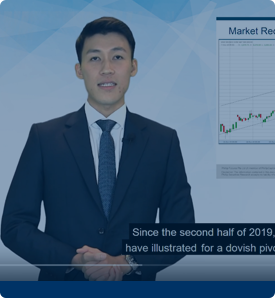
PhillipCapital Morning Webinar: Market Updates and Analysis for 21 Sep 2026 September 25, 2026

PhillipCapital’s recent morning webinar provided comprehensive insights across multiple market sectors, featuring stock updates, real estate investment trust (REIT) analysis, and macroeconomic perspectives. The session covered key developments in technology stocks, Asian retail markets, and regional economic trends.
Stock Counter Updates: Mixed Technology Performance
Oracle Shows Strong AI Momentum
Oracle delivered impressive first-quarter results with significant AI monetisation gains. The company’s cloud infrastructure business demonstrated exceptional growth at 121% year-over-year, compared to 93% in the previous quarter. This acceleration stems from the successful monetisation of their Stargate project with OpenAI, which has reached 75% of planned capacity, delivering 618 megawatts across 6 of 8 completed buildings at their Texas campus.
The company’s revenue pipeline remains robust, with remaining performance obligations (RPO) growing by US$26 billion compared to US$19 billion in quarterly revenue, indicating strong future demand. Oracle secured US$30 billion in new AI contracts featuring customer prepayment arrangements, reducing the company’s funding requirements, and improving cash flow dynamics.
However, challenges persist with a negative free cash flow of US$5 billion due to heavy infrastructure investments totaling US$28 billion in capital expenditure. Despite this, Oracle maintains its full-year guidance of US$90-95 billion, with expectations of significant capacity expansion by 2027.
Adobe Faces AI Monetisation Challenges
Adobe’s third-quarter performance met expectations but revealed concerning trends in AI adoption monetisation. While the company showed continued strength in creative products with 70% year-over-year growth reaching 100 million users across products like Firefly, Express, Premiere, Photoshop, and Lightroom, the pace of converting user acquisition into revenue remains slow.
The company’s backlog growth of only 8% significantly lags behind revenue growth of 13%, indicating difficulties in translating AI adoption into financial returns. Cost pressures are mounting, with cost of revenue rising from 15% to 18% quarterly, reflecting higher infrastructure costs associated with AI product delivery without proportional revenue scaling.
Adobe’s guidance increases remained minimal at just 0.2% for revenue, despite strong user metrics. The company recently appointed a new CEO while maintaining continuity with former CEO Shantanu Narayan transitioning to executive chairman.
Regional Market Insights: Asia-Pacific Focus
Sasseur REIT: China Outlet Resilience
Site visits to Sasseur REIT’s Chongqing properties revealed encouraging operational dynamics despite broader Chinese consumer spending challenges. The company’s outlet malls demonstrated steady growth with the Liang Jiang branch up 4% year-over-year and the Bishan branch growing 3.5% year-over-year.
Strategic initiatives include continuous tenant–mix refreshing and retail space reorganisation, particularly developing distinguished open-air pedestrian shopping areas targeting younger demographics with domestic designer fashion brands. The company’s VIP membership programme shows strong momentum with 17% year-over-year growth, contributing to over 60% of portfolio sales and providing effective customer retention platforms.
Toku: AI-Powered Customer Experience Growth
Toku, a cloud-native AI-powered customer experience platform, reported $19 million in first-half revenue with 71% coming from usage-based services growing 20% year-over-year. The company’s order book reached $29 million, up 25% for the first half, consisting primarily of subscription contracts running 5-15 years with improved gross margins of 89% compared to 56% previously.
The platform serves diverse applications from flight bookings to tax inquiries, with core markets in APAC representing 77% of total revenue. Despite current net losses of US$3.8 million due to commercial capacity investments and regional expansion, the company maintains strong fundamentals with no debt and US$4 million cash reserves.
REIT Market Analysis: Navigating Rate Hike Cycles
Historical Performance During Rate Increases
Analysis of REIT performance during previous Fed rate hike cycles reveals mixed outcomes. Following the recent 25 basis points increase to 2.75-4%, historical data from 2004, 2015, and 2022 cycles showed that immediate post-hike performance (one week) remained positive across all instances.
However, longer-term performance varies significantly based on hiking pace and magnitude. The 2022 cycle’s aggressive 500 basis points increase over 18 months resulted in negative 12-month returns, while more gradual increases in 2004 (over 24 months) yielded positive returns.
Current expectations suggest a more moderate approach, with approximately 20 basis points of interest savings anticipated year-over-year for Singapore REITs, primarily due to favourable 3-month SORA rates relative to Fed funds rates.
Sector Outlook and Positioning
Despite rate pressures, Singapore REITs show potential for 3.2% year-over-year distribution growth in FY2026. Retail REITs remain favoured due to strong reversion potential, with July retail sales maintaining positive 1.5% growth led by recreational goods and luxury items.
Hospitality REITs face mixed conditions with visitor arrivals down 0.3% year-over-year in August, though strong seasonal factors and major entertainment events (including BTS concerts) support second-half prospects. However, year-to-date arrivals remain 2% below prior year and 11% below pre-COVID levels.
Macro-Economic Perspectives
Federal Reserve Policy Trajectory
The Fed’s recent 25 basis points increase aligns with market expectations, with officials maintaining that economic resilience provides room for continued policy tightening. September economic projections show upgraded growth outlooks and lower unemployment forecasts, reinforcing the Fed’s capacity for additional measures.
Market pricing indicates 80% probability of another rate hike by December, with expectations of one hike in 2026 and two additional increases in 2027. This trajectory suggests a mid-cycle adjustment rather than an aggressive tightening cycle.
Regional Economic Divergence
Singapore demonstrates remarkable export strength with record-breaking performance in electronics (up 132%) and semiconductors (up 90%), potentially necessitating GDP forecast revisions. This contrasts sharply with persistent tourism weakness, showing five consecutive months of contraction.
China continues displaying concerning economic indicators with residential property prices reverting to 2016-2018 levels after six years of contraction. Fixed asset investments decline as private sector investment contracts over 10%, while retail sales show sub-1% growth for the first time in recent history.
The divergence is particularly stark when compared to robust US retail sales of 7% (6% excluding gasoline), representing the highest levels since the pandemic alongside strong re-leveraging through commercial bank loans.
Frequently Asked Questions
Q: What will need to happen for Chinese markets to recover?
A: The primary requirement appears to be substantial government spending intervention. The current environment shows extremely weak consumer confidence combined with significant deflation pressures from the property sector collapse affecting household wealth. Despite low interest rates (below Singapore levels) and strong export performance, domestic stimulus hasn't materialised. Large-scale government stimulus would be necessary to restore confidence and break the current deflationary cycle.
Q: Do you see Japanese yields going up and any yen intervention potential?
A: There's scepticism regarding Japanese yen strength sustainability given the dramatic swings in foreign reserves. Yields should continue rising due to ongoing fiscal stimulus measures. However, the effectiveness of yen intervention remains questionable given the scale of required reserves and current market dynamics.
Q: Are US employment numbers still accurate given recent revisions?
A: The employment numbers remain generally accurate, though monthly releases are estimates subject to subsequent revisions. The revision process provides final official numbers, so some variance between initial estimates and actual figures is normal and expected in the data collection process.
Q: US retail sales are strong, but this isn't reflected in United Hampshire REIT prices - why?
A: United Hampshire REIT operates primarily on fixed lease structures with rental escalations rather than gross turnover rent arrangements. Strong tenant sales indicate healthy tenant performance and lower default risk, but don't translate directly into higher rental income for the landlord. The minimal gross turnover rent component means that exceptional retail performance benefits tenants more than the REIT's revenue stream.
Q: What's the outlook for Singapore interest rates?
A: Singapore interest rates show signs of bottoming out, which should be positive for local banks' interest margins. While rates may not spike as dramatically as in the US, the bottoming process reduces headwinds for banking sector profitability and net interest margins going forward.
This article has been auto-generated using PhillipGPT. It is based on a report by a Phillip Securities Research analyst.
Disclaimer
These commentaries are intended for general circulation and do not have regard to the specific investment objectives, financial situation and particular needs of any person. Accordingly, no warranty whatsoever is given and no liability whatsoever is accepted for any loss arising whether directly or indirectly as a result of any person acting based on this information. You should seek advice from a financial adviser regarding the suitability of any investment product(s) mentioned herein, taking into account your specific investment objectives, financial situation or particular needs, before making a commitment to invest in such products.
Opinions expressed in these commentaries are subject to change without notice. Investments are subject to investment risks including the possible loss of the principal amount invested. The value of units in any fund and the income from them may fall as well as rise. Past performance figures as well as any projection or forecast used in these commentaries are not necessarily indicative of future or likely performance.
Phillip Securities Pte Ltd (PSPL), its directors, connected persons or employees may from time to time have an interest in the financial instruments mentioned in these commentaries.
The information contained in these commentaries has been obtained from public sources which PSPL has no reason to believe are unreliable and any analysis, forecasts, projections, expectations and opinions (collectively the “Research”) contained in these commentaries are based on such information and are expressions of belief only. PSPL has not verified this information and no representation or warranty, express or implied, is made that such information or Research is accurate, complete or verified or should be relied upon as such. Any such information or Research contained in these commentaries are subject to change, and PSPL shall not have any responsibility to maintain the information or Research made available or to supply any corrections, updates or releases in connection therewith. In no event will PSPL be liable for any special, indirect, incidental or consequential damages which may be incurred from the use of the information or Research made available, even if it has been advised of the possibility of such damages. The companies and their employees mentioned in these commentaries cannot be held liable for any errors, inaccuracies and/or omissions howsoever caused. Any opinion or advice herein is made on a general basis and is subject to change without notice. The information provided in these commentaries may contain optimistic statements regarding future events or future financial performance of countries, markets or companies. You must make your own financial assessment of the relevance, accuracy and adequacy of the information provided in these commentaries.
Views and any strategies described in these commentaries may not be suitable for all investors. Opinions expressed herein may differ from the opinions expressed by other units of PSPL or its connected persons and associates. Any reference to or discussion of investment products or commodities in these commentaries is purely for illustrative purposes only and must not be construed as a recommendation, an offer or solicitation for the subscription, purchase or sale of the investment products or commodities mentioned.
This advertisement has not been reviewed by the Monetary Authority of Singapore.
 Maximizing Retirement Wealth: How to Invest CPF-OA and SRS in SGX ETFs
  Buying the Dip: When are Lower Prices an Opportunity and When are They a Trap
  What Are AI ETFs and Why Should You Care
  Mooncakes: The Hidden Environmental Cost of Gifting