
What Caring for Ageing Parents Teaches Us About Financial Planning November 17, 2026

As Singapore transitions to a super-aged society, the question of how best to plan for the care and support of our parents in their old age is more pertinent than ever.
As a working adult caring for two elderly parents myself, these are questions that have been on my mind for quite some time.
While we all want the best for our loved ones, the reality is that trade-offs and difficult choices will have to be made at some point. However, before that happens, it is possible to plan ahead so that everyone in the family is aligned about what needs to be done without compromise.
From my personal experience, there are several things that anyone with elderly parents to look after can do to better prepare themselves
1. Planning for the Costs
It is a fact that our health declines as we age. Sometimes, chronic illnesses set in. Hospital bills become an eventuality. The Ministry of Health (MOH) estimates that 1 in 2 Singapore residents aged 65 could develop severe disability at some point in their lifetime and require long-term care.
Fortunately, national insurance schemes such as MediShield Life and CareShield Life have been in place for some years now to help address the inevitable health costs. They can also be supplemented with additional coverage for greater peace of mind.
My parents are fortunate to have obtained Integrated Shield Plans to help cover hospitalisation costs. They have also upgraded their ElderShield coverage to CareShield Life under my advice. My father was unable to obtain a CareShield Life supplement due to his existing health condition, so I set up a caregiving fund for him last year, which is intended to grow steadily without exposure to market volatility. Although not all risks can be transferred to insurance, this fund will provide some financial relief to our family and give us more options when the time comes.
All these outcomes were the result of years of planning and refinement, but it is never too late to start.
2. The Balancing Act
There is no doubt that supporting both ageing parents while managing one’s own family commitments requires sacrifices to balance the budget. Given the limited resources we all have, it can be challenging to balance our own needs while striving to maintain an adequate level of support for our parents.
Just as financial planning is done for individuals, planning for my parents started with the most basic step: understanding the circumstances. With a clearer picture of the situation and the numbers involved, the most important goals can then be identified and prioritised.
For example, one may seek to ensure that premiums for parents’ hospitalisation plans can be afforded for as long as possible. Resources must then be directed towards achieving that goal. Alternatively, the priority could be setting up a fund for miscellaneous caregiving expenses.
When considered alongside personal financial goals, it becomes easier to determine which goals to prioritise and which may need to be adjusted to maximise the chances of overall success.
3. Preparing for the Unexpected
There was a moment of dread when the doctor first confirmed my father’s dementia diagnosis. Although we had suspected it, the news still hit hard when the doctor broke the news to us.
After we left the consultation room, I pulled my brother aside and told him in no uncertain terms that we had better prepare ourselves for the financial avalanche that would hit us in the future.
While we knew there were some schemes that could provide some financial assistance, our primary concern was the uncertainty of how costs might escalate should his situation deteriorate rapidly.
Naturally, it is important to have adequate insurance in place beforehand to ensure that any scenarios involving potentially high costs could be largely absorbed by insurance. This means that the necessary plans should ideally be in place long before any signs of major health issues become apparent.
Although Integrated Shield Plans often come to mind, one cannot overlook the importance of having other types of coverage to address the potential gaps.
Critical illness coverage provides a lump sum of cash upon diagnosis of a covered illness, such as cancer or stroke, subject to the policy’s terms and conditions. This payout can be used to offset costs that may not be covered by an Integrated Shield Plan.
These could include Traditional Chinese Medicine, home modifications, transportation costs, out-of-pocket costs such as deductibles and co-insurance. Other examples include seeking a second medical opinion, buying supplements to aid recovery, or exploring new treatments that may not be covered under existing medical insurance plans. The list goes on. There is generally no restriction on how a critical illness payout can be used. This sum of money can be extremely useful at the onset of a serious medical condition, helping families cope with the expected spike in expenses.
Long-term care coverage, on the other hand, helps to provide an ongoing stream of payouts to cope with recurring expenses, such as caregiving costs, a live-in helper, or even nursing home fees.
What if one is declined coverage? In such cases, setting aside funds for immediate needs becomes essential, alongside exploring longer-term funding options through a caregiving fund that can eventually be drawn down if costs increase.
On top of all that, having a Lasting Power of Attorney (LPA) and a will in place is equally important. These legal instruments help ensure that the appropriate individuals are empowered to make decisions or carry out the necessary actions when the need arises, whether that involves managing a loved one’s personal welfare and property matters or handling the distribution of their estate.
Such important decisions naturally involved extensive discussions between my parents and the people whom they wish to appoint, whether as donees under an LPA or eventual executors of their wills.
Which brings me to the next point.
4. Having the Difficult Conversation
This is never an easy thing to do. However, the earlier the conversation takes place, the easier the caregiving journey can become, down the road.
There is always a certain existential dread in realising that age has caught up with us. That is the reality of life, however, and the best that we can do is to make plans ahead of time to deal with what may come.
Given the number of decisions that need to be made regarding various aspects of care, it may be worth having these conversations in stages, and more importantly, with key family members who will be making critical decisions.
My parents’ own decisions were formalised over multiple discussions over dinners, visits to relevant organisations to have our queries answered, and finally, a visit to a lawyer to complete both their LPA and wills.
This took well over half a year, but they never once felt overwhelmed by having to make too many decisions all at once.
Ultimately they had the time to weigh their options and consider what was most important for themselves and their children, ensuring that everyone was agreeable and on the same page.
Contributors:
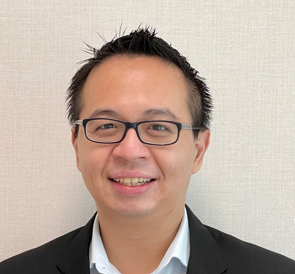
Elijah Lee
Senior Financial Services Manager
Phillip Securities Pte Ltd (A member of PhillipCapital)
http://bit.ly/TTPelijah
Disclaimer
These commentaries are intended for general circulation and do not have regard to the specific investment objectives, financial situation and particular needs of any person. Accordingly, no warranty whatsoever is given and no liability whatsoever is accepted for any loss arising whether directly or indirectly as a result of any person acting based on this information. You should seek advice from a financial adviser regarding the suitability of any investment product(s) mentioned herein, taking into account your specific investment objectives, financial situation or particular needs, before making a commitment to invest in such products.
Opinions expressed in these commentaries are subject to change without notice. Investments are subject to investment risks including the possible loss of the principal amount invested. The value of units in any fund and the income from them may fall as well as rise. Past performance figures as well as any projection or forecast used in these commentaries are not necessarily indicative of future or likely performance.
Phillip Securities Pte Ltd (PSPL), its directors, connected persons or employees may from time to time have an interest in the financial instruments mentioned in these commentaries.
The information contained in these commentaries has been obtained from public sources which PSPL has no reason to believe are unreliable and any analysis, forecasts, projections, expectations and opinions (collectively the “Research”) contained in these commentaries are based on such information and are expressions of belief only. PSPL has not verified this information and no representation or warranty, express or implied, is made that such information or Research is accurate, complete or verified or should be relied upon as such. Any such information or Research contained in these commentaries are subject to change, and PSPL shall not have any responsibility to maintain the information or Research made available or to supply any corrections, updates or releases in connection therewith. In no event will PSPL be liable for any special, indirect, incidental or consequential damages which may be incurred from the use of the information or Research made available, even if it has been advised of the possibility of such damages. The companies and their employees mentioned in these commentaries cannot be held liable for any errors, inaccuracies and/or omissions howsoever caused. Any opinion or advice herein is made on a general basis and is subject to change without notice. The information provided in these commentaries may contain optimistic statements regarding future events or future financial performance of countries, markets or companies. You must make your own financial assessment of the relevance, accuracy and adequacy of the information provided in these commentaries.
Views and any strategies described in these commentaries may not be suitable for all investors. Opinions expressed herein may differ from the opinions expressed by other units of PSPL or its connected persons and associates. Any reference to or discussion of investment products or commodities in these commentaries is purely for illustrative purposes only and must not be construed as a recommendation, an offer or solicitation for the subscription, purchase or sale of the investment products or commodities mentioned.
This advertisement has not been reviewed by the Monetary Authority of Singapore.
About the author
Elijah Lee
Senior Financial Services Manager
As a Senior Financial Services Manager with Phillip Securities, Elijah has demonstrated technical competency and knowledge in various areas of wealth management such as risk management, wealth accumulation, portfolio allocation, tax planning, retirement planning, estate planning, combined with significant practical experience in the advanced financial planning needs of individuals and families.
Besides managing his clients' financial portfolios and planning for their comfortable retirement, he also allocates a portion of his time to reach out to the public via webinars, educating them on various aspects of financial management to ensure that they feel confident in achieving their financial goals and dreams. He has been invited on the radio station Money89.3FM to share his views on various topics as well as being interviewed on Channel NewsAsia and The Straits Times.
 Buying the Dip: When are Lower Prices an Opportunity and When are They a Trap
 Protecting More Than Just Walls: Fire Insurance vs Home Insurance
 Before the Year Ends: Key Financial Steps for a Confident 2026
 The ILP Debate: Why Singaporeans Struggle With Financial Product Decisions