Tesla Q3 2026 Results: Margin Recovery and SELL Rating Outlook November 4, 2026
Overview
Tesla reported third-quarter 2026 results above expectations, with nine-month revenue and adjusted net profit after minority interests at 82% and 84% of full-year 2026 estimates. Adjusted net profit, excluding share-based compensation and fair value changes on bitcoin and SpaceX shares, fell 4% year-on-year to US$1.7 billion, as a 39% rise in operating expenses and a 73% fall in regulatory credits offset a 9% rise in gross profit. Revenue was flat year-on-year at US$28.0 billion. Deliveries fell 2% year-on-year to 487,000 units against a third-quarter 2025 base lifted by buying ahead of the US electric vehicle tax credit expiry, but beat consensus of 462,000. Active Full Self-Driving subscriptions rose 67% year-on-year to 1.74 million, while free cash flow fell 62% year-on-year to US$1.5 billion as capital expenditure more than doubled to US$4.7 billion.
Investment Positives
Margins Recover on Vehicle Mix, Energy and Services
Gross margin rose 1.6 percentage points year-on-year to 19.6%. Auto gross margin excluding credits improved to 18.1% from 15.4% in the third quarter of 2025, driven by a higher Asia-Pacific delivery mix, as Model Y set delivery records in several markets including Australia, Japan and Taiwan. Energy gross margin rose to 33.1% from 31.4%, supported by tariff refunds and a vendor reimbursement of cell warranty costs. The Services and Other segment delivered strong performance, with revenue rising 33% year-on-year to US$4.6 billion and record gross profit of US$734 million at a 15.9% margin, led by Supercharging and insurance. Tesla exited the quarter with its largest order backlog in four years, and Megapacks are almost sold out for 2027.
FSD and Robotaxi Are Scaling
Active Full Self-Driving (FSD) subscriptions rose 67% year-on-year to 1.74 million, with half of those on monthly subscriptions, and over 75% of North America deliveries signed up for paid FSD at delivery. The chief financial officer agreed that FSD annual recurring revenue is approaching US$1 billion. FSD is approved in nine European countries, and management expects approval across the EU by the first quarter of 2027. Cybercab rides started in Austin on 3 September, cumulative unsupervised miles rose eightfold in the quarter, and Robotaxi launches in Dallas next month. Semi started volume production in Nevada, and Optimus started early production on the Fremont high-volume line.
Investment Challenges
OPEX Growth Absorbs the Margin Gains
Operating income fell 56% year-on-year to US$718 million, and the operating margin fell to 2.6% from 5.8% in the third quarter of 2025. Operating expenses rose 39% year-on-year to US$4.8 billion, as research and development increased 69% to US$2.8 billion on SI compute depreciation, chip development and ramp costs for Optimus, Megapack 3 and Semi. Share-based compensation rose 76% to US$1.2 billion on the 2025 CEO Performance Award. Management expects operating expenses to keep rising until these products are commercialised. Regulatory credits fell 73% year-on-year to US$113 million, and GAAP net profit fell 43% year-on-year to US$787 million.
Auto and Energy Revenue Fell
Auto revenue fell 3% year-on-year to US$20.6 billion on lower average selling prices, lower regulatory credits and 2% fewer deliveries, as deliveries of other models fell 48% year-on-year. Energy revenue fell 16% year-on-year to US$2.9 billion, partly due to tariff-related customer refunds, and storage deployments of 13.7 gigawatt-hours, up 10% year-on-year, missed consensus of 15.9 gigawatt-hours. The energy margin was lifted by tariff refunds received and a warranty reimbursement, which may not recur. Free cash flow fell 62% year-on-year to US$1.5 billion as capital expenditure more than doubled to US$4.7 billion. Higher commodity costs and interest rates add further cost pressure.
Outlook
Full-year 2026 capital expenditure guidance was cut to approximately US$20 billion from over US$25 billion previously and will be funded mainly from operating cash flow, with no draws planned this year on the new US$30 billion debt facilities. However, management expects capital expenditure to rise over the next few years on the Robotaxi fleet, Optimus capacity, solar manufacturing, SI compute and the Terafab chip plant, which needs tens of billions by early 2028 and possibly over US$100 billion in the long term. Optimus should take at least a year to reach 20,000 units a week, with external deliveries from the end of 2027. Unsupervised FSD in customer cars is expected around the second quarter of 2027, and Tesla targets 5 million vehicles a year by around 2030.
We note that the third quarter of 2026 was better on margins but not on profit. While gross margin recovered to 19.6% on vehicle mix, energy refunds and services, the 39% rise in operating expenses absorbed the gain, and operating margin of 2.6% is less than half of the third-quarter 2025 level. Part of the energy margin gain came from tariff refunds and a warranty reimbursement that may not recur. We remain cautious in the near term due to margin compression from rising operating expenses and fading regulatory credits, intense competition in China from BYD and domestic EV brands such as Xiaomi and Geely, elevated capital expenditure requirements, and the fact that meaningful revenue from Robotaxi and Optimus is still more than five years away. At 248 times financial year 2026 estimated price-to-earnings, the analyst believes optionality is already priced in.
Recommendation and Target Price
Phillip Securities Research maintains a SELL recommendation on Tesla with a higher target price of US$230, raised from US$220 previously. The increase reflects an 8% raise in financial year 2026 earnings estimates from higher auto revenue estimates. The weighted average cost of capital and growth rate assumptions of 9% and 5% respectively remain unchanged.
*This article has been auto-generated using PhillipGPT. It is based on a report by a Phillip Securities Research analyst.*
Frequently Asked Questions
Q: What is the current recommendation and target price for Tesla?
A: Phillip Securities Research maintains a SELL recommendation with a higher target price of US$230, raised from the previous US$220, reflecting an 8% increase in financial year 2026 earnings estimates from higher auto revenue estimates.
Q: How did Tesla's margins perform in 3Q26
A: Gross margin rose 1.6 percentage points year-on-year to 19.6%. Auto gross margin excluding credits improved to 18.1% from 15.4%, driven by a higher Asia-Pacific delivery mix. However, the operating margin fell to 2.6% from 5.8% as a 39% rise in operating expenses absorbed the margin gains.
Q: How are Full Self-Driving and Robotaxi progressing?
A: Active FSD subscriptions rose 67% year-on-year to 1.74 million, with annual recurring revenue approaching US$1 billion. FSD is approved in nine European countries. Cybercab rides started in Austin on 3 September, cumulative unsupervised miles rose eightfold in the quarter, and Robotaxi launches in Dallas next month.
Q: Why did operating expenses rise so sharply?
A: Operating expenses rose 39% year-on-year to US$4.8 billion. Research and development increased 69% to US$2.8 billion on SI compute depreciation, chip development and ramp costs for Optimus, Megapack 3 and Semi. Share-based compensation rose 76% to US$1.2 billion on the 2025 CEO Performance Award. Management expects operating expenses to keep rising until these products are commercialised.
Q: What happened to regulatory credits?
A: Regulatory credits fell 73% year-on-year to US$113 million in the third quarter of 2026, contributing to the decline in profitability.
Q: What is the capital expenditure outlook?
A: Full-year 2026 capital expenditure guidance was cut to approximately US$20 billion from over US$25 billion previously. However, capital expenditure is expected to rise from financial year 2027 as Tesla funds Terafab, Optimus capacity and the Robotaxi fleet. Terafab alone needs tens of billions by early 2028.
Q: What are the key risks highlighted by the analyst?
A: The analyst highlights margin compression from rising operating expenses and fading regulatory credits, intense competition in China from BYD, Xiaomi and Geely, elevated capital expenditure keeping free cash flow low, and the fact that meaningful revenue from long-term initiatives such as Robotaxi and Optimus is still more than five years away. The stock trades at 248 times financial year 2026 estimated price-to-earnings.
Q: How did deliveries perform in 3Q26?
A: Deliveries fell 2% year-on-year to 487,000 units against a third-quarter 2025 base that was elevated by buying ahead of the US EV tax credit expiry. However, deliveries beat consensus of 462,000 and exceeded production by 22,000 units, leaving inventory at 11 days of supply.
Disclaimer
These commentaries are intended for general circulation and do not have regard to the specific investment objectives, financial situation and particular needs of any person. Accordingly, no warranty whatsoever is given and no liability whatsoever is accepted for any loss arising whether directly or indirectly as a result of any person acting based on this information. You should seek advice from a financial adviser regarding the suitability of any investment product(s) mentioned herein, taking into account your specific investment objectives, financial situation or particular needs, before making a commitment to invest in such products.
Opinions expressed in these commentaries are subject to change without notice. Investments are subject to investment risks including the possible loss of the principal amount invested. The value of units in any fund and the income from them may fall as well as rise. Past performance figures as well as any projection or forecast used in these commentaries are not necessarily indicative of future or likely performance.
Phillip Securities Pte Ltd (PSPL), its directors, connected persons or employees may from time to time have an interest in the financial instruments mentioned in these commentaries.
The information contained in these commentaries has been obtained from public sources which PSPL has no reason to believe are unreliable and any analysis, forecasts, projections, expectations and opinions (collectively the “Research”) contained in these commentaries are based on such information and are expressions of belief only. PSPL has not verified this information and no representation or warranty, express or implied, is made that such information or Research is accurate, complete or verified or should be relied upon as such. Any such information or Research contained in these commentaries are subject to change, and PSPL shall not have any responsibility to maintain the information or Research made available or to supply any corrections, updates or releases in connection therewith. In no event will PSPL be liable for any special, indirect, incidental or consequential damages which may be incurred from the use of the information or Research made available, even if it has been advised of the possibility of such damages. The companies and their employees mentioned in these commentaries cannot be held liable for any errors, inaccuracies and/or omissions howsoever caused. Any opinion or advice herein is made on a general basis and is subject to change without notice. The information provided in these commentaries may contain optimistic statements regarding future events or future financial performance of countries, markets or companies. You must make your own financial assessment of the relevance, accuracy and adequacy of the information provided in these commentaries.
Views and any strategies described in these commentaries may not be suitable for all investors. Opinions expressed herein may differ from the opinions expressed by other units of PSPL or its connected persons and associates. Any reference to or discussion of investment products or commodities in these commentaries is purely for illustrative purposes only and must not be construed as a recommendation, an offer or solicitation for the subscription, purchase or sale of the investment products or commodities mentioned.
This advertisement has not been reviewed by the Monetary Authority of Singapore.
About the author
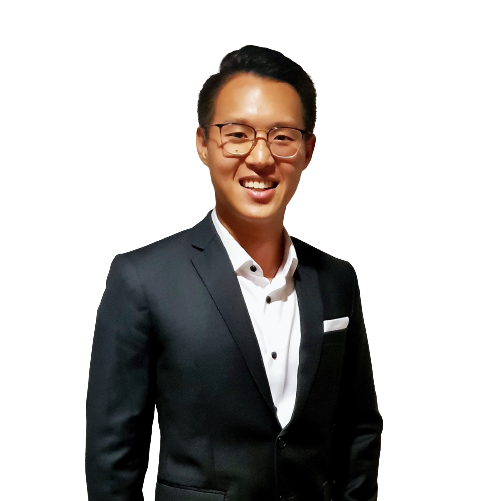
Glenn Thum
Glenn covers the Banking and Finance sector. He has had 3 years of experience as a Credit Analyst in a Bank, where he prepared credit proposals by conducting consistent critical analysis on the business, market, country and financial information. Glenn graduated with a Bachelor of Business Management from the University of Queensland with a double major in International Business and Human Resources.
 UltraGreen.ai: BUY Maintained With Lower Target Price of US$0.73 — Segmenting to Defend
 First REIT: Accumulate With a Lower Target Price of S$0.17 — Still Waiting for the Next Move
 Singapore Air Transport: Sector Rated NEUTRAL as Cargo Growth Offsets Jet Fuel Headwinds — SATS (TP S$5.01), CAO (TP S$2.01), SIA Engineering (TP S$3.90) at BUY
 Meta Platforms: BUY Rating Maintained With Target Price of US$800 as AI-Powered Advertising Drives Strong Growth