Benchmark index
Table of Contents
Benchmark index
It takes expertise to make informed decisions in the dynamic world of finance and investing. Benchmark indices are at the forefront of this dynamic market, and are essential tools for investors and fund managers. These indexes serve as a yardstick for the general performance of markets, sectors, or asset classes and offer insightful information and points of comparison for assessing investment strategies. Investors may evaluate the performance of their portfolios and successfully traverse the complexity of the financial world by understanding how benchmark indices function and using their advantages.
What is a benchmark index?
A benchmark index, usually referred to as a market index or just a benchmark, is a standard statistic that depicts the general performance of a certain market, sector, or asset class. It acts as a benchmark against which investors can gauge the success of their investments and come to conclusions.
A carefully chosen asset selection that reflects a certain market or sector often makes up benchmark indices. Typically, the weighting of these securities is set by their market capitalisation or another predetermined metric. A benchmark against which the returns of certain investments or investment funds can be measured is the benchmark index’s performance.
Understanding a benchmark index
A benchmark index captures the performance of a certain market, sector, or asset type. The index is often built using a predetermined set of stocks indicative of the market or industry it seeks to follow. Commodities, bonds, stocks, and other financial products are examples of these securities.
The choice of securities and how they are weighted within benchmark indexes are determined by predetermined processes. Market capitalisation weighting, where larger businesses have a greater impact on the index’s performance, and price weighting, where higher-priced stocks hold more sway, are common techniques.
Benchmark indices are a useful resource for making investment choices. They serve as a foundation for assessing the risk involved in an investment and for diversifying portfolios across various markets and asset classes. In general, understanding benchmark indices is essential for investors looking to navigate the complexity of financial markets and to optimise their investing strategy.
How a benchmark index works
A benchmark index’s working entails the following critical steps:
- Securities selection
The first stage is to choose the securities that will make up the index. A representative selection of the most popular and prominent stocks might be selected by the index provider, for instance, in the case of a stock market index.
- Weighting methodology
The benchmark index assigns a weight to each security based on a predetermined methodology. One of the most popular techniques is market capitalisation weighting, where larger companies have a greater impact on the index’s performance.
- Regular rebalancing
Benchmark indices are periodically rebalanced to maintain their accuracy and relevance. It entails changing the weights assigned to the securities or adding or deleting specific assets in response to changes in the market.
- Index value calculation
The market prices or prices of the securities that make up the index are used to determine the index value. As a measure of the change in the index’s overall performance, the index value is typically expressed in points or percentages.
Benefits of a benchmark index
- Performance assessment
Benchmark indices offer a straightforward and unbiased way to assess a fund’s performance or a portfolio of investments. Investors can determine the efficacy of their investing strategy by comparing their returns to the index’s performance.
- Risk assessment
Benchmark indices can also be used to evaluate the risk of an investment. Investors can assess the riskiness of a product or fund by comparing its volatility to that of the benchmark.
- Making informed investment decisions
Benchmark indices are useful instruments for making wise investment choices. The index can be used as a guide for investors to evaluate new assets and match them with their financial objectives.
- Diversification insights
Benchmark indices provide insights into diversification by displaying the comparative performance of several industries or asset classes. Investors using this information can reduce their exposure to particular assets and diversify their risk across various sectors.
Examples of a benchmark index
A well-known benchmark index is the S&P 500. The widely used S&P 500 benchmark represents the 500 largest publicly listed corporations’ performance firms in the US. It provides a thorough depiction of the US economy because it includes businesses from many industries and accounts for around 80% of the equity market value in the country. The S&P 500 acts as a gauge for the state and performance of the US stock market because it is a frequently used index.
Investors and fund managers regularly use the S&P 500 to assess their portfolios and make investment decisions in light of broader market trends.
Frequently Asked Questions
A benchmark index provides investors and fund managers with a point of reference to assess and compare their investments’ performance to the overall market or certain industries.
It is known as a benchmark because it acts as a standard or point of comparison for evaluating and comparing the performance of other assets or portfolios. It establishes the standard for measuring an investment’s performance.
- Market benchmarks
The S&P 500, which tracks the 500 largest US corporations, is an example of a market benchmark. Market benchmarks: Represent the overall performance of a certain market or economy.
- Style benchmarks
Distinguish between various investment styles, such as growth vs. value stocks, to aid investors in analysing particular market segments.
- Bond benchmarks
Track the performance of fixed-income instruments, such as the Barclays Global Aggregate Bond Index, which provides an overview of the state of the global bond market.
- Custom benchmarks
Made to measure specialised portfolios or funds against specific investment strategies or objectives.
The “best” stock benchmark is debatable, depending on unique circumstances and financial objectives. Since multiple benchmarks serve varied functions and consider different investor preferences, there is no conclusive response.
Related Terms
- Cost of Equity
- Capital Adequacy Ratio (CAR)
- Interest Coverage Ratio
- Industry Groups
- Income Statement
- Historical Volatility (HV)
- Embedded Options
- Dynamic Asset Allocation
- Depositary Receipts
- Deferment Payment Option
- Debt-to-Equity Ratio
- Financial Futures
- Contingent Capital
- Conduit Issuers
- Calendar Spread
- Cost of Equity
- Capital Adequacy Ratio (CAR)
- Interest Coverage Ratio
- Industry Groups
- Income Statement
- Historical Volatility (HV)
- Embedded Options
- Dynamic Asset Allocation
- Depositary Receipts
- Deferment Payment Option
- Debt-to-Equity Ratio
- Financial Futures
- Contingent Capital
- Conduit Issuers
- Calendar Spread
- Devaluation
- Grading Certificates
- Distributable Net Income
- Cover Order
- Tracking Index
- Auction Rate Securities
- Arbitrage-Free Pricing
- Net Profits Interest
- Borrowing Limit
- Algorithmic Trading
- Corporate Action
- Spillover Effect
- Economic Forecasting
- Treynor Ratio
- Hammer Candlestick
- DuPont Analysis
- Net Profit Margin
- Law of One Price
- Annual Value
- Rollover option
- Financial Analysis
- Currency Hedging
- Lump sum payment
- Annual Percentage Yield (APY)
- Excess Equity
- Fiduciary Duty
- Bought-deal underwriting
- Anonymous Trading
- Fair Market Value
- Fixed Income Securities
- Redemption fee
- Acid Test Ratio
- Bid Ask price
- Finance Charge
- Futures
- Basis grades
- Short Covering
- Visible Supply
- Transferable notice
- Intangibles expenses
- Strong order book
- Fiat money
- Trailing Stops
- Exchange Control
- Relevant Cost
- Dow Theory
- Hyperdeflation
- Hope Credit
- Futures contracts
- Human capital
- Subrogation
- Qualifying Annuity
- Strategic Alliance
- Probate Court
- Procurement
- Holding company
- Harmonic mean
- Income protection insurance
- Recession
- Savings Ratios
- Pump and dump
- Total Debt Servicing Ratio
- Debt to Asset Ratio
- Liquid Assets to Net Worth Ratio
- Liquidity Ratio
- Personal financial ratios
- Payroll deduction plan
- Operating expenses
- Demand elasticity
- Deferred compensation
- Conflict theory
- Acid-test ratio
- Withholding Tax
- Double Taxation Relief
- Debtor Risk
- Securitization
- Yield on Distribution
- Currency Swap
- Overcollateralization
- Efficient Frontier
- Listing Rules
- Green Shoe Options
- Accrued Interest
- Market Order
- Accrued Expenses
- Target Leverage Ratio
- Acceptance Credit
- Balloon Interest
- Abridged Prospectus
- Data Tagging
- Perpetuity
- Optimal portfolio
- Hybrid annuity
- Investor fallout
- Intermediated market
- Information-less trades
- Back Months
- Adjusted Futures Price
- Expected maturity date
- Excess spread
- Quantitative tightening
- Accreted Value
- Equity Clawback
- Soft Dollar Broker
- Stagnation
- Replenishment
- Decoupling
- Holding period
- Regression analysis
- Wealth manager
- Financial plan
- Adequacy of coverage
- Actual market
- Credit risk
- Insurance
- Financial independence
- Annual report
- Financial management
- Ageing schedule
- Global indices
- Folio number
- Accrual basis
- Liquidity risk
- Quick Ratio
- Unearned Income
- Sustainability
- Value at Risk
- Vertical Financial Analysis
- Residual maturity
- Operating Margin
- Trust deed
- Profit and Loss Statement
- Junior Market
- Affinity fraud
- Base currency
- Working capital
- Individual Savings Account
- Redemption yield
- Net profit margin
- Fringe benefits
- Fiscal policy
- Escrow
- Externality
- Multi-level marketing
- Joint tenancy
- Liquidity coverage ratio
- Hurdle rate
- Kiddie tax
- Giffen Goods
- Keynesian economics
- EBITA
- Risk Tolerance
- Disbursement
- Bayes’ Theorem
- Amalgamation
- Adverse selection
- Contribution Margin
- Accounting Equation
- Value chain
- Gross Income
- Net present value
- Liability
- Leverage ratio
- Inventory turnover
- Gross margin
- Collateral
- Being Bearish
- Being Bullish
- Commodity
- Exchange rate
- Basis point
- Inception date
- Riskometer
- Trigger Option
- Zeta model
- Racketeering
- Market Indexes
- Short Selling
- Quartile rank
- Defeasance
- Cut-off-time
- Business-to-Consumer
- Bankruptcy
- Acquisition
- Turnover Ratio
- Indexation
- Fiduciary responsibility
- Benchmark
- Pegging
- Illiquidity
- Backwardation
- Backup Withholding
- Buyout
- Beneficial owner
- Contingent deferred sales charge
- Exchange privilege
- Asset allocation
- Maturity distribution
- Letter of Intent
- Emerging Markets
- Consensus Estimate
- Cash Settlement
- Cash Flow
- Capital Lease Obligations
- Book-to-Bill-Ratio
- Capital Gains or Losses
- Balance Sheet
- Capital Lease
Most Popular Terms
Other Terms
- Bond Convexity
- Compound Yield
- Brokerage Account
- Discretionary Accounts
- Industry Groups
- Growth Rate
- Green Bond Principles
- Gamma Scalping
- Funding Ratio
- Free-Float Methodology
- Foreign Direct Investment (FDI)
- Floating Dividend Rate
- Flight to Quality
- Real Return
- Protective Put
- Perpetual Bond
- Option Adjusted Spread (OAS)
- Non-Diversifiable Risk
- Merger Arbitrage
- Liability-Driven Investment (LDI)
- Income Bonds
- Guaranteed Investment Contract (GIC)
- Flash Crash
- Equity Carve-Outs
- Cost Basis
- Deferred Annuity
- Cash-on-Cash Return
- Earning Surprise
- Bubble
- Beta Risk
- Bear Spread
- Asset Play
- Accrued Market Discount
- Ladder Strategy
- Junk Status
- Intrinsic Value of Stock
- Interest-Only Bonds (IO)
- Inflation Hedge
- Incremental Yield
- Industrial Bonds
- Holding Period Return
- Hedge Effectiveness
- Flat Yield Curve
- Fallen Angel
- Exotic Options
- Execution Risk
- Exchange-Traded Notes
- Event-Driven Strategy
- Eurodollar Bonds
- Enhanced Index Fund
Know More about
Tools/Educational Resources
Markets Offered by POEMS
Read the Latest Market Journal
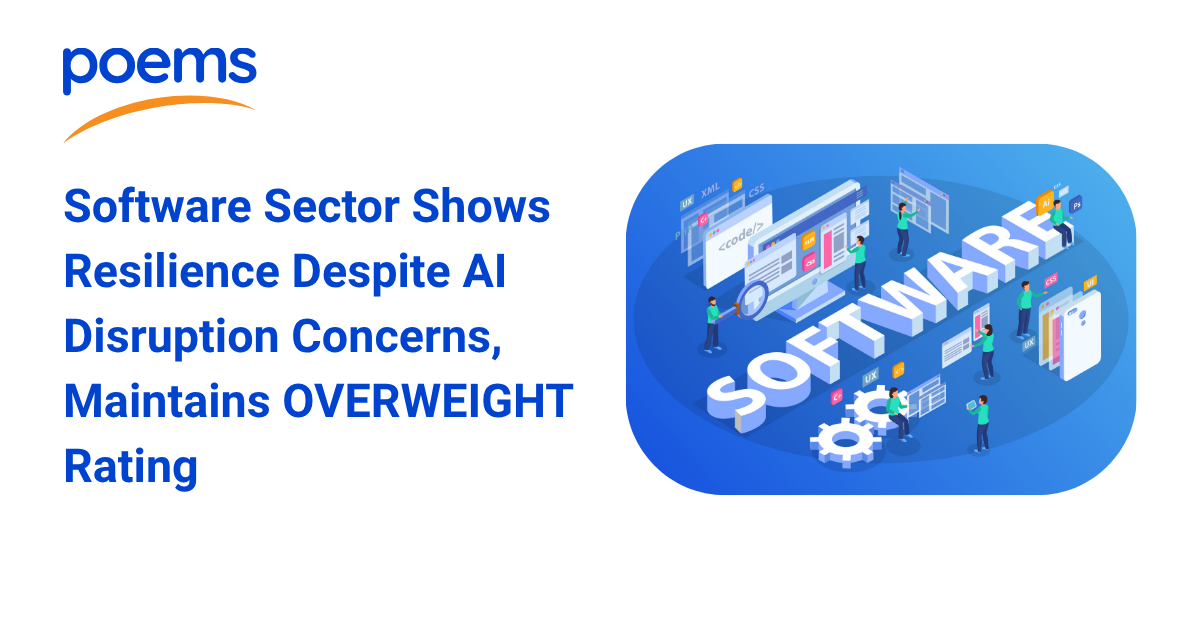
Software Sector Remains Resilient Amid AI Disruption Concerns
Market Performance and Sector Dynamics The software sector experienced notable volatility in the first quarter of 2026, with the iShares Expanded Tech-Software Sector ETF (IGV) declining 20% year-to-date despite a 4% quarter-on-quarter recovery. This performance significantly lagged the S&P 500's 8% gain, reflecting investor concerns about higher capital expenditure guidance and a rotation towards AI infrastructure plays. Within the ETF, performance diverged sharply across different software categories. Cybersecurity leaders Palo Alto Networks (PANW) and CrowdStrike (CRWD) outperformed, alongside data analytics companies MongoDB (MDB) and Snowflake (SNOW). However, traditional software-as-a-service (SaaS) companies faced significant pressure, with Palantir declining 40%, Adobe falling 44%, and Salesforce dropping 43% amid SaaS derating and concerns about agentic AI disruption. Fundamental Strength Persists Despite market pessimism surrounding potential AI disruption, the underlying fundamentals of the software sector remain robust. SaaS companies delivered their strongest revenue performance in 14 quarters, with last-12-months revenue growth accelerating to 17% year-on-year in the first quarter of 2026, representing a 4.4 percentage point improvement from the previous year. Large-cap SaaS companies demonstrated particular resilience, maintaining 17% year-on-year growth while preserving superior profitability metrics. This performance suggests that market leaders have experienced limited disruption from AI technologies, contrary to broader market concerns about sector-wide displacement. Investment Strategy and Outlook Phillip Securities Research maintains an OVERWEIGHT rating on the software sector, focusing on three key areas positioned to benefit from AI adoption: SaaS infrastructure, cybersecurity, and data analytics. Top stock picks include Microsoft, Oracle, Palantir, and Palo Alto Networks, supported by strong AI and cloud adoption trends, robust demand visibility, and growing cybersecurity requirements. The current valuation environment presents opportunities, with large-cap SaaS companies trading at EV/Sales ratios of 9.5 times, representing the negative one standard deviation level despite rising software revenue and net income. The strategy emphasizes companies that provide essential AI infrastructure, maintain mission-critical cybersecurity functions, and offer data analytics capabilities crucial for enterprise AI implementation. Frequently Asked Questions [market_journal_faq] This article has been auto-generated using PhillipGPT. It is based on a report by a Phillip Securities Research analyst. Disclaimer These commentaries are intended for general circulation and do not have regard to the specific investment objectives, financial situation and particular needs of any person. Accordingly, no warranty whatsoever is given and no liability whatsoever is accepted for any loss arising whether directly or indirectly as a result of any person acting based on this information. You should seek advice from a financial adviser regarding the suitability of any investment product(s) mentioned herein, taking into account your specific investment objectives, financial situation or particular needs, before making a commitment to invest in such products. Opinions expressed in these commentaries are subject to change without notice. Investments are subject to investment risks including the possible loss of the principal amount invested. The value of units in any fund and the income from them may fall as well as rise. Past performance figures as well as any projection or forecast used in these commentaries are not necessarily indicative of future or likely performance. Phillip Securities Pte Ltd (PSPL), its directors, connected persons or employees may from time to time have an interest in the financial instruments mentioned in these commentaries. The information contained in these commentaries has been obtained from public sources which PSPL has no reason to believe are unreliable and any analysis, forecasts, projections, expectations and opinions (collectively the “Research”) contained in these commentaries are based on such information and are expressions of belief only. PSPL has not verified this information and no representation or warranty, express or implied, is made that such information or Research is accurate, complete or verified or should be relied upon as such. Any such information or Research contained in these commentaries are subject to change, and PSPL shall not have any responsibility to maintain the information or Research made available or to supply any corrections, updates or releases in connection therewith. In no event will PSPL be liable for any special, indirect, incidental or consequential damages which may be incurred from the use of the information or Research made available, even if it has been advised of the possibility of such damages. The companies and their employees mentioned in these commentaries cannot be held liable for any errors, inaccuracies and/or omissions howsoever caused. Any opinion or advice herein is made on a general basis and is subject to change without notice. The information provided in these commentaries may contain optimistic statements regarding future events or future financial performance of countries, markets or companies. You must make your own financial assessment of the relevance, accuracy and adequacy of the information provided in these commentaries. Views and any strategies described in these commentaries may not be suitable for all investors. Opinions expressed herein may differ from the opinions expressed by other units of PSPL or its connected persons and associates. Any reference to or discussion of investment products or commodities in these commentaries is purely for illustrative purposes only and must not be construed as a recommendation, an offer or solicitation for the subscription, purchase or sale of the investment products or commodities mentioned. This advertisement has not been reviewed by the Monetary Authority of Singapore.
UltraGreen.ai Positioned for Growth with ICG Platform Expansion, BUY Rating and US$1.92 Target Price
Phillip Securities Research has initiated coverage on UltraGreen.ai with a BUY rating and target price of US$1.92, highlighting the company's transformation from a traditional dye and hardware business into an integrated indocyanine green (ICG) platform. The research firm's valuation is based on DCF analysis, utilising a 10% WACC and 7 times exit multiple. The company is currently trading at FY26e forward P/E of 15.2 times and EV/EBITDA of 16 times. Company Overview UltraGreen.ai operates in the fluorescence-guided surgery market, providing ICG dyes and near-infrared imaging hardware to healthcare providers. The company is expanding its business model beyond commodity products to become a comprehensive ICG platform provider, incorporating data analytics and software solutions. Market Opportunity and Penetration Drivers Strong market tailwinds are driving greater ICG penetration across both established and emerging surgical procedures globally. Currently, ICG penetration across surgical procedures remains in the low double-digits, with the exception of choroid diagnostics. However, penetration rates are expected to increase by double digits across the majority of procedures using fluorescence-guided surgery by 2028. The primary driver for this expansion is the growing adoption of ICG as a standard of care, with major surgical societies incorporating ICG into their clinical guidelines. A significant catalyst for UltraGreen.ai will be the expiry of Novadaq's Breast Sentinel Lymph Node exclusivity in June 2026, enabling the company to file for US approval and potentially capture a US$66.2 million market opportunity at full ICG penetration. Platform Business Transformation UltraGreen.ai is strategically expanding from its traditional dye plus hardware business into an integrated ICG platform through its PerfusionWorks quantification software and cloud platform. The PerfusionWorks software is expected to receive Europe MDR regulatory approval by 2H26, with subsequent US FDA filing planned to use the European dataset. Notably, the software is camera agnostic and can be used with competitors' imaging hardware, making every near-infrared-capable imaging device a potential customer. This approach addresses the critical obstacle of subjectivity in fluorescence imaging assessment by providing objective and reproducible perfusion data, thereby facilitating standardisation required for broader ICG adoption as a standard of care. Growth Strategy and Financial Position The company maintains a robust financial position, with net cash of US$176.1 million and is pursuing growth initiatives worth approximately US$150 million in potential investments or acquisitions across API suppliers, distributors, and lyophilisation companies. UltraGreen.ai also plans to transition from distributor models to direct sales in select markets, reducing distributor fees and enabling direct hospital relationships. This would support the bundling ICG vials with NIR cameras and cross-selling PerfusionWorks software. The research forecasts a 2-year earnings CAGR of 18.6%. Frequently Asked Questions [market_journal_faq] This article has been auto-generated using PhillipGPT. It is based on a report by a Phillip Securities Research analyst. Disclaimer These commentaries are intended for general circulation and do not have regard to the specific investment objectives, financial situation and particular needs of any person. Accordingly, no warranty whatsoever is given and no liability whatsoever is accepted for any loss arising whether directly or indirectly as a result of any person acting based on this information. You should seek advice from a financial adviser regarding the suitability of any investment product(s) mentioned herein, taking into account your specific investment objectives, financial situation or particular needs, before making a commitment to invest in such products. Opinions expressed in these commentaries are subject to change without notice. Investments are subject to investment risks including the possible loss of the principal amount invested. The value of units in any fund and the income from them may fall as well as rise. Past performance figures as well as any projection or forecast used in these commentaries are not necessarily indicative of future or likely performance. Phillip Securities Pte Ltd (PSPL), its directors, connected persons or employees may from time to time have an interest in the financial instruments mentioned in these commentaries. The information contained in these commentaries has been obtained from public sources which PSPL has no reason to believe are unreliable and any analysis, forecasts, projections, expectations and opinions (collectively the “Research”) contained in these commentaries are based on such information and are expressions of belief only. PSPL has not verified this information and no representation or warranty, express or implied, is made that such information or Research is accurate, complete or verified or should be relied upon as such. Any such information or Research contained in these commentaries are subject to change, and PSPL shall not have any responsibility to maintain the information or Research made available or to supply any corrections, updates or releases in connection therewith. In no event will PSPL be liable for any special, indirect, incidental or consequential damages which may be incurred from the use of the information or Research made available, even if it has been advised of the possibility of such damages. The companies and their employees mentioned in these commentaries cannot be held liable for any errors, inaccuracies and/or omissions howsoever caused. Any opinion or advice herein is made on a general basis and is subject to change without notice. The information provided in these commentaries may contain optimistic statements regarding future events or future financial performance of countries, markets or companies. You must make your own financial assessment of the relevance, accuracy and adequacy of the information provided in these commentaries. Views and any strategies described in these commentaries may not be suitable for all investors. Opinions expressed herein may differ from the opinions expressed by other units of PSPL or its connected persons and associates. Any reference to or discussion of investment products or commodities in these commentaries is purely for illustrative purposes only and must not be construed as a recommendation, an offer or solicitation for the subscription, purchase or sale of the investment products or commodities mentioned. This advertisement has not been reviewed by the Monetary Authority of Singapore.

Company Overview Thai Beverage PLC operates as one of Southeast Asia's leading beverage companies, with significant operations spanning alcoholic beverages, including beer and spirits, as well as non-alcoholic products. The company has established itself as a major player in the regional market through its diverse portfolio and strategic investments, including its position as the second-largest shareholder in Vinamilk, one of the Vietnam’s largest dairy companies. Strategic Response to Consumer Pressures Thai Beverage is implementing a comprehensive five-pronged strategy to address the current challenging consumer environment. The company is focusing on smaller pack sizes and stock-keeping units (SKUs) to achieve more affordable price points, recognising that consumers are searching for value during this difficult period. The strategy extends to health and wellness through protein-based non-alcoholic products, whilst offering greater convenience through ready-to-drink (RTD) spirits. The RTD spirits initiative represents a particularly strategic move, as it does not cannibalise existing distilled spirits sales but instead makes products more accessible and convenient for consumers. This category can attract consumers from the beer segment whilst delivering higher gross margins due to lower excise duties compared to beer. Importantly, existing manufacturing capacity already supports RTD spirits production, requiring minimal additional capital expenditure. Financial Outlook and Market Position The company's financial position is expected to strengthen as free cash flow improves following major capital expenditure over the past two years in Cambodia and a dairy farm in Malaysia. This improved balance sheet provides flexibility for potential acquisitions, whilst forward purchases of raw materials are largely hedged for the current financial year's requirements. Phillip Securities Research maintains a BUY recommendation with a target price of S$0.53, highlighting Thai Beverage’s attractive valuations at 10 times FY26e earnings, with a dividend yield of approximately 5.5%. Margins are expected to remain resilient due to lower-priced raw materials purchased and disciplined operating cost management. The potential spinoff of Beerco presents an asset monetisation opportunity, particularly given Southeast Asia's, especially Vietnam's, attractiveness to strategic investors as a growing consumer market. Frequently Asked Questions [market_journal_faq] This article has been auto-generated using PhillipGPT. It is based on a report by a Phillip Securities Research analyst. Disclaimer These commentaries are intended for general circulation and do not have regard to the specific investment objectives, financial situation and particular needs of any person. Accordingly, no warranty whatsoever is given and no liability whatsoever is accepted for any loss arising whether directly or indirectly as a result of any person acting based on this information. You should seek advice from a financial adviser regarding the suitability of any investment product(s) mentioned herein, taking into account your specific investment objectives, financial situation or particular needs, before making a commitment to invest in such products. Opinions expressed in these commentaries are subject to change without notice. Investments are subject to investment risks including the possible loss of the principal amount invested. The value of units in any fund and the income from them may fall as well as rise. Past performance figures as well as any projection or forecast used in these commentaries are not necessarily indicative of future or likely performance. Phillip Securities Pte Ltd (PSPL), its directors, connected persons or employees may from time to time have an interest in the financial instruments mentioned in these commentaries. The information contained in these commentaries has been obtained from public sources which PSPL has no reason to believe are unreliable and any analysis, forecasts, projections, expectations and opinions (collectively the “Research”) contained in these commentaries are based on such information and are expressions of belief only. PSPL has not verified this information and no representation or warranty, express or implied, is made that such information or Research is accurate, complete or verified or should be relied upon as such. Any such information or Research contained in these commentaries are subject to change, and PSPL shall not have any responsibility to maintain the information or Research made available or to supply any corrections, updates or releases in connection therewith. In no event will PSPL be liable for any special, indirect, incidental or consequential damages which may be incurred from the use of the information or Research made available, even if it has been advised of the possibility of such damages. The companies and their employees mentioned in these commentaries cannot be held liable for any errors, inaccuracies and/or omissions howsoever caused. Any opinion or advice herein is made on a general basis and is subject to change without notice. The information provided in these commentaries may contain optimistic statements regarding future events or future financial performance of countries, markets or companies. You must make your own financial assessment of the relevance, accuracy and adequacy of the information provided in these commentaries. Views and any strategies described in these commentaries may not be suitable for all investors. Opinions expressed herein may differ from the opinions expressed by other units of PSPL or its connected persons and associates. Any reference to or discussion of investment products or commodities in these commentaries is purely for illustrative purposes only and must not be construed as a recommendation, an offer or solicitation for the subscription, purchase or sale of the investment products or commodities mentioned. This advertisement has not been reviewed by the Monetary Authority of Singapore.

Micron Technology Benefits from AI Memory Demand and Tight Supply
Company Overview Micron Technology, Inc. is a leading semiconductor company specializing in memory solutions, producing both DRAM and NAND flash memory products for various applications including mobile, client, and automotive markets. Strong Financial Performance Driven by ASP Surge Micron delivered exceptional third-quarter FY2026 results, with adjusted profit after tax and minority interests spiking 12.2 times year-on-year to a record US$28.9 billion. This remarkable performance was underpinned by 41% year-on-year bit shipment growth and substantial average selling price (ASP) increases, estimated at 215% for DRAM and 272% for NAND products. The nine-month FY2026 revenue and adjusted PATMI reached 73% and 72% of full-year forecasts respectively, indicating strong momentum. Revenue surged to US$42 billion whilst profit margins expanded significantly, with gross margins reaching 84.9%, driven primarily by the higher ASPs across both memory segments. Strategic Customer Agreements Reduce Cyclicality A key positive development is Micron's progress in securing long-term strategic customer agreements (SCAs). The company has signed 16 such agreements to date, covering approximately 20% of DRAM volume and 30% of NAND volume from 2026 to 2030. These agreements represent US$100 billion in remaining performance obligations, equivalent to 2.7 times FY25 revenue, with US$22 billion in cash deposits and financial commitments from customers. The SCAs include price bands with floor prices that enable higher gross margins than Micron's historical peak of 63%. This structure provides greater revenue visibility and reduces the company's traditional cyclical exposure, although approximately 75% of revenue remains subject to cyclical demand patterns in mobile, client, and automotive segments. Market Dynamics Support Pricing Power Memory supply remains constrained due to lengthy lead times for new fabrication facility expansions, which typically require 2 to 4 years, alongside persistent cleanroom space limitations. Customers are prioritizing volume security over price considerations, leading major players including Samsung, SK Hynix, and Micron to sign longer-term contracts spanning 3 to 5 years, compared to typical one-year commitments historically. Investment Recommendation Phillip Securities Research maintains a BUY rating with a raised target price of US$1870, reflecting increased FY27 revenue and PATMI forecasts raised by 16% and 23% respectively. The valuation assumes a 14 times FY27 price-to-earnings ratio, representing a 52% discount to peers' average forward P/E of 29 times, acknowledging the remaining cyclical exposure in non-SCA revenue streams. Frequently Asked Questions [market_journal_faq] This article has been auto-generated using PhillipGPT. It is based on a report by a Phillip Securities Research analyst. Disclaimer These commentaries are intended for general circulation and do not have regard to the specific investment objectives, financial situation and particular needs of any person. Accordingly, no warranty whatsoever is given and no liability whatsoever is accepted for any loss arising whether directly or indirectly as a result of any person acting based on this information. You should seek advice from a financial adviser regarding the suitability of any investment product(s) mentioned herein, taking into account your specific investment objectives, financial situation or particular needs, before making a commitment to invest in such products. Opinions expressed in these commentaries are subject to change without notice. Investments are subject to investment risks including the possible loss of the principal amount invested. The value of units in any fund and the income from them may fall as well as rise. Past performance figures as well as any projection or forecast used in these commentaries are not necessarily indicative of future or likely performance. Phillip Securities Pte Ltd (PSPL), its directors, connected persons or employees may from time to time have an interest in the financial instruments mentioned in these commentaries. The information contained in these commentaries has been obtained from public sources which PSPL has no reason to believe are unreliable and any analysis, forecasts, projections, expectations and opinions (collectively the “Research”) contained in these commentaries are based on such information and are expressions of belief only. PSPL has not verified this information and no representation or warranty, express or implied, is made that such information or Research is accurate, complete or verified or should be relied upon as such. Any such information or Research contained in these commentaries are subject to change, and PSPL shall not have any responsibility to maintain the information or Research made available or to supply any corrections, updates or releases in connection therewith. In no event will PSPL be liable for any special, indirect, incidental or consequential damages which may be incurred from the use of the information or Research made available, even if it has been advised of the possibility of such damages. The companies and their employees mentioned in these commentaries cannot be held liable for any errors, inaccuracies and/or omissions howsoever caused. Any opinion or advice herein is made on a general basis and is subject to change without notice. The information provided in these commentaries may contain optimistic statements regarding future events or future financial performance of countries, markets or companies. You must make your own financial assessment of the relevance, accuracy and adequacy of the information provided in these commentaries. Views and any strategies described in these commentaries may not be suitable for all investors. Opinions expressed herein may differ from the opinions expressed by other units of PSPL or its connected persons and associates. Any reference to or discussion of investment products or commodities in these commentaries is purely for illustrative purposes only and must not be construed as a recommendation, an offer or solicitation for the subscription, purchase or sale of the investment products or commodities mentioned. This advertisement has not been reviewed by the Monetary Authority of Singapore.
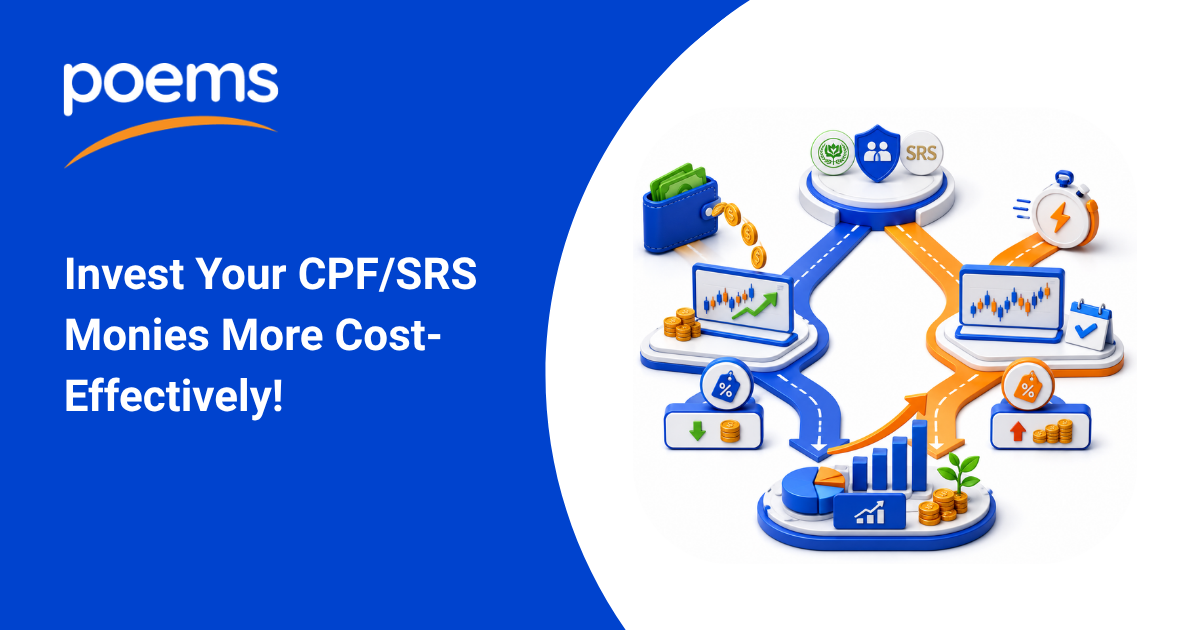
Save on Brokerage Fees When Trading with CPF/SRS Funds
If you want to invest using your CPF Investment Account (CPFIS) or Supplementary Retirement Scheme (SRS) funds, you can choose between our Cash Plus Account and Cash Management Account. Both account types allow you to trade using your CPF/SRS monies. Read on to find out how they differ! Cash Plus Account Cash Plus Account offers a significantly lower brokerage rate of 0.08% with no minimum commission for trading on the SGX market. To place a BUY order, you will need to prefund your account with cash. A minimum of 50% of the expected trade value* is required as buying power before a trade can be placed or submitted online. The good news is that cash is only required temporarily. Once the CPF/SRS trade is settled, the prefunded amount can be withdrawn or used for the next trade. This could potentially result in significant cost savings for smaller trades and Dollar Cost Averaging (DCA) strategy! *Full amount is required for non-marginable counters Cash Management Account Cash Management Account offers greater convenience as no prefunding is required. We will increase your trading limit after reviewing your CPF/SRS statements. This allows you to place trades directly using the approved trading limit. However, the brokerage fee is higher at 0.28%, subject to a minimum commission of S$25. Example: BUY 100 shares of DBS at S$64.38 per share Trade Value: S$6,438 Under Cash Management Account: Approx. Brokerage Fee: S$25 (Minimum commission applies) Under Cash Plus Account: Approx. Brokerage Fee: S$5.20 By prefunding the required amount on Cash Plus Account, you could save approximately SGD 20 on brokerage fees for this trade alone. Which account should you choose? If you are comfortable prefunding your account with cash, the Cash Plus Account can help you reduce trading costs substantially. The prefunded cash can be withdrawn after the CPF/SRS transaction has been settled. If you prefer the convenience of trading without prefunding, Cash Management Account may be more suitable, although the brokerage charges will be higher. For investors looking to minimize trading costs, the Cash Plus Account is generally the more cost-effective option. Disclaimer These commentaries are intended for general circulation and do not have regard to the specific investment objectives, financial situation and particular needs of any person. Accordingly, no warranty whatsoever is given and no liability whatsoever is accepted for any loss arising whether directly or indirectly as a result of any person acting based on this information. You should seek advice from a financial adviser regarding the suitability of any investment product(s) mentioned herein, taking into account your specific investment objectives, financial situation or particular needs, before making a commitment to invest in such products. Opinions expressed in these commentaries are subject to change without notice. Investments are subject to investment risks including the possible loss of the principal amount invested. The value of units in any fund and the income from them may fall as well as rise. Past performance figures as well as any projection or forecast used in these commentaries are not necessarily indicative of future or likely performance. Phillip Securities Pte Ltd (PSPL), its directors, connected persons or employees may from time to time have an interest in the financial instruments mentioned in these commentaries. The information contained in these commentaries has been obtained from public sources which PSPL has no reason to believe are unreliable and any analysis, forecasts, projections, expectations and opinions (collectively the “Research”) contained in these commentaries are based on such information and are expressions of belief only. PSPL has not verified this information and no representation or warranty, express or implied, is made that such information or Research is accurate, complete or verified or should be relied upon as such. Any such information or Research contained in these commentaries are subject to change, and PSPL shall not have any responsibility to maintain the information or Research made available or to supply any corrections, updates or releases in connection therewith. In no event will PSPL be liable for any special, indirect, incidental or consequential damages which may be incurred from the use of the information or Research made available, even if it has been advised of the possibility of such damages. The companies and their employees mentioned in these commentaries cannot be held liable for any errors, inaccuracies and/or omissions howsoever caused. Any opinion or advice herein is made on a general basis and is subject to change without notice. The information provided in these commentaries may contain optimistic statements regarding future events or future financial performance of countries, markets or companies. You must make your own financial assessment of the relevance, accuracy and adequacy of the information provided in these commentaries. Views and any strategies described in these commentaries may not be suitable for all investors. Opinions expressed herein may differ from the opinions expressed by other units of PSPL or its connected persons and associates. Any reference to or discussion of investment products or commodities in these commentaries is purely for illustrative purposes only and must not be construed as a recommendation, an offer or solicitation for the subscription, purchase or sale of the investment products or commodities mentioned. This advertisement has not been reviewed by the Monetary Authority of Singapore.

The True Zero: More Than Just Savings
What Would You Do With Zero? The best time to start investing was yesterday. The second-best time is today. Now, with our US$0 commission trading on POEMS, investors can focus more on opportunities and less on transaction costs. For many first-time investors, the hesitation is not a lack of interest. Instead, it is the thought of paying a commission on every trade, especially when the investment amount is small. This creates a false impression that investing only makes sense when there is a larger pool of capital. The absence of commission fees changes this dynamic. When commission fees are removed, getting started on investing becomes easier. Investors have one less reason to hesitate and can begin with the amount they are comfortable with, invest consistently over time, and respond to market opportunities without having to factor trading costs into every decision. Freedom To Start Small Many people think investing is something you do once you have accumulated enough capital. But waiting for "enough" is often what prevents people from investing in the first place. Successful investing is not about starting with a large amount. It is more about starting early and staying consistent. Consider investing just US$100 a month. Over 20 years, the amount accumulated may surprise you. Not because US$100 is a large sum, but because time, consistency, and compounding work together to build wealth over the long term. To illustrate, the table below uses a 7% annual return, based on the S&P 500's long-term historical average, alongside a typical savings account interest rate of 1.8% p.a. While past performance does not guarantee future results, it serves as a useful benchmark to demonstrate the potential impact of long-term investing. Year Total Contribution (US$) Invested (7% p.a.) (US$) Saving Account (1.8% p.a.) (US$) 1 1,200 1,239 1,210 5 6,000 7,159 6,273 10 12,000 17,308 13,137 15 18,000 31,696 20,647 20 24,000 52,093 28,863 Actual returns will vary and are not guaranteed. Investing involves risk, including the possible loss of principal. With US$0 commission on POEMS, investors can put smaller amounts to work without having to consider whether trading costs outweigh the value of their investment. Whether you are investing $50 or $500, the ability to start small makes it easier to build disciplined investing habits over time. Time in the market can have a greater impact on long-term outcomes than the size of the initial investment. The key is not how much you start with, but having the confidence to take the first step. Freedom To Turn Headlines Into Investments Every day, investors are exposed to headlines on artificial intelligence breakthroughs, technology IPOs, cybersecurity advances, semiconductor developments, and the growing space technology. These stories are hard to ignore and naturally prompt investors to take action. Thematic ETFs help by offering targeted exposure to sectors and industries shaped by long-term structural trends. Instead of researching and selecting individual companies, investors can gain diversified exposure through a single investment. Whether it is artificial intelligence, semiconductors, or space technology, thematic ETFs allow investors to translate ideas sparked by headlines into actionable opportunities. In the past, acting on such ideas often came with a hidden cost. Commission fees made smaller, exploratory investments harder to justify, causing many investors to stay on the sidelines while trends unfolded. With US$0 commission, investors can now explore emerging themes without the barrier of transaction costs. This allows for smaller positions, gradual conviction-building, and more flexible portfolio construction over time. After all, ideas are only as valuable as the ability to act on them. Freedom To Stay Consistent Successful investors often have one thing in common: consistency. Instead of chasing market highs and lows, they invest regularly through monthly contributions, dollar-cost averaging, and long-term portfolio building. These habits compound over time, but they are most effective when investors maintain them consistently. Historically, commission fees created friction by adding a cost to every transaction, discouraging frequent, smaller investments. With US$0 commission, that obstacle is removed, and makes it easier for investors to commit to regular contributions, stay the course through market volatility, and build their portfolios steadily without eroding returns at the point of entry. Consistency beats complexity. When the cost to stay consistent is zero, it becomes easier to invest for the long term. Freedom To Own The Future: Understanding Your Financial Needs Everyone’s investment journey is different. Investing carries risk, and understanding your own financial situation is the first step to navigating it well. Factors such as risk tolerance, your investment horizon, and investment objective should shape the decisions you make along the way. The US$0 commission removes one variable from that equation, meaning your decisions can be driven by opportunity and strategy, rather than transaction costs. Now, investors can start small, act on ideas and stay consistent with greater flexibility. With US$0 commission on POEMS Cash Plus, accessing these opportunities becomes more convenient and cost-efficient. Whether you are just starting or building on an existing portfolio, now may be a good time to take the next step. Invest in US stocks with zero commission through POEMS Cash Plus here. All investments carry risk. Please ensure you understand your own financial situation and risk tolerance before investing. References: 1. https://www.sofi.com/learn/content/average-stock-market-return/ Disclaimer These commentaries are intended for general circulation and do not have regard to the specific investment objectives, financial situation and particular needs of any person. Accordingly, no warranty whatsoever is given and no liability whatsoever is accepted for any loss arising whether directly or indirectly as a result of any person acting based on this information. You should seek advice from a financial adviser regarding the suitability of any investment product(s) mentioned herein, taking into account your specific investment objectives, financial situation or particular needs, before making a commitment to invest in such products. Opinions expressed in these commentaries are subject to change without notice. Investments are subject to investment risks including the possible loss of the principal amount invested. The value of units in any fund and the income from them may fall as well as rise. Past performance figures as well as any projection or forecast used in these commentaries are not necessarily indicative of future or likely performance. Phillip Securities Pte Ltd (PSPL), its directors, connected persons or employees may from time to time have an interest in the financial instruments mentioned in these commentaries. The information contained in these commentaries has been obtained from public sources which PSPL has no reason to believe are unreliable and any analysis, forecasts, projections, expectations and opinions (collectively the “Research”) contained in these commentaries are based on such information and are expressions of belief only. PSPL has not verified this information and no representation or warranty, express or implied, is made that such information or Research is accurate, complete or verified or should be relied upon as such. Any such information or Research contained in these commentaries are subject to change, and PSPL shall not have any responsibility to maintain the information or Research made available or to supply any corrections, updates or releases in connection therewith. In no event will PSPL be liable for any special, indirect, incidental or consequential damages which may be incurred from the use of the information or Research made available, even if it has been advised of the possibility of such damages. The companies and their employees mentioned in these commentaries cannot be held liable for any errors, inaccuracies and/or omissions howsoever caused. Any opinion or advice herein is made on a general basis and is subject to change without notice. The information provided in these commentaries may contain optimistic statements regarding future events or future financial performance of countries, markets or companies. You must make your own financial assessment of the relevance, accuracy and adequacy of the information provided in these commentaries. Views and any strategies described in these commentaries may not be suitable for all investors. Opinions expressed herein may differ from the opinions expressed by other units of PSPL or its connected persons and associates. Any reference to or discussion of investment products or commodities in these commentaries is purely for illustrative purposes only and must not be construed as a recommendation, an offer or solicitation for the subscription, purchase or sale of the investment products or commodities mentioned. This advertisement has not been reviewed by the Monetary Authority of Singapore.
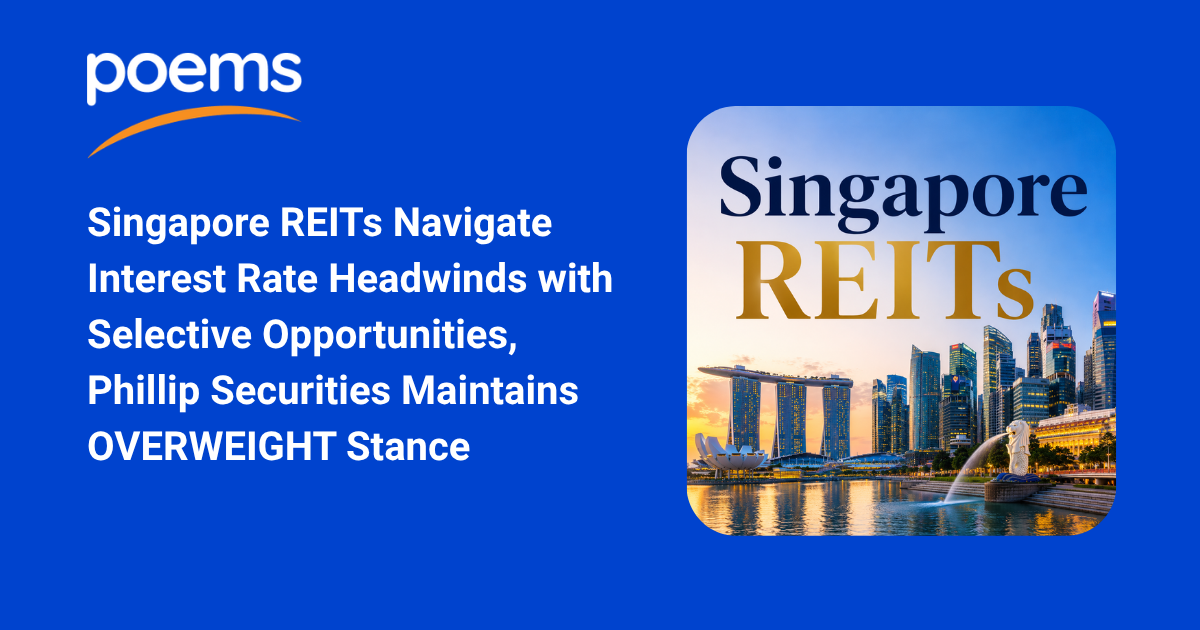
Market Performance and Outlook Singapore REITs faced headwinds in May 2026, with the S-REITs Index declining 1.6% as markets increasingly priced in potential interest rate hikes, reversing the previous month's 3.2% gain. Despite this setback, Phillip Securities Research maintains its OVERWEIGHT stance on the sector, while adopting a selective approach given the current interest rate environment. The performance disparity within the sector was notable. AIMS APAC REIT led gains at 4.6% following strong FY26 results, while Acrophyte Hospitality Trust suffered a significant 20% decline due to severe weather conditions and rising operating costs affecting its 1Q26 performance. Sector-wise, overseas retail emerged as the best-performing sub-sector with a 0.3% gain, whilst overseas commercial lagged with a 3.5% decline as US-office REITs reacted negatively to higher interest rate prospects. Interest Rate Environment and Growth Expectations The global monetary policy landscape remains mixed, with the ECB and BOJ raising policy rates by 25 basis points in June, whilst the Fed maintained rates unchanged at 3.50% to 3.75%. However, the Fed's dot plot indicates potential for one rate hike in 2026, with markets pricing in two rate hikes by year-end. Despite these concerns, Phillip Securities expects approximately 80% of S-REITs to benefit from stable or lower financing costs, as benchmark interest rates remain lower year-on-year. The 3M SORA has declined over 110 basis points year-on-year to approximately 1.08%, providing tailwinds for Singapore REITs with SGD-denominated debt due for refinancing. This favourable environment, combined with rental growth of 1% to 3% from contractual escalations and positive reversions, should support average DPU growth of approximately 3% year-on-year for covered S-REITs in FY26e. Investment Strategy and Top Picks Phillip Securities' investment preference centres on REITs with robust balance sheets, defensive earnings profiles, and higher proportions of fixed-rate borrowings. The firm particularly favours retail S-REITs, supported by healthy tenant sales and limited new supply, which should underpin mid- to high-single-digit rental reversions in 2026. The research house's top picks include Stoneweg Europe Stapled Trust (BUY, target price: €1.89), Elite UK REIT (BUY, target price: £0.41), United Hampshire US REIT (BUY, target price: US$0.69), and Prime US REIT (BUY, target price: US$0.32). Stoneweg Europe Stapled Trust stands out with 87% of debt hedged through late 2027 and FY26e cost of debt to remain below 4% despite recent ECB rate hikes.It is also trading at a 25% discount to NAV, with an attractive 8.6% dividend yield. Frequently Asked Questions [market_journal_faq] This article has been auto-generated using PhillipGPT. It is based on a report by a Phillip Securities Research analyst. Disclaimer These commentaries are intended for general circulation and do not have regard to the specific investment objectives, financial situation and particular needs of any person. Accordingly, no warranty whatsoever is given and no liability whatsoever is accepted for any loss arising whether directly or indirectly as a result of any person acting based on this information. You should seek advice from a financial adviser regarding the suitability of any investment product(s) mentioned herein, taking into account your specific investment objectives, financial situation or particular needs, before making a commitment to invest in such products. Opinions expressed in these commentaries are subject to change without notice. Investments are subject to investment risks including the possible loss of the principal amount invested. The value of units in any fund and the income from them may fall as well as rise. Past performance figures as well as any projection or forecast used in these commentaries are not necessarily indicative of future or likely performance. Phillip Securities Pte Ltd (PSPL), its directors, connected persons or employees may from time to time have an interest in the financial instruments mentioned in these commentaries. The information contained in these commentaries has been obtained from public sources which PSPL has no reason to believe are unreliable and any analysis, forecasts, projections, expectations and opinions (collectively the “Research”) contained in these commentaries are based on such information and are expressions of belief only. PSPL has not verified this information and no representation or warranty, express or implied, is made that such information or Research is accurate, complete or verified or should be relied upon as such. Any such information or Research contained in these commentaries are subject to change, and PSPL shall not have any responsibility to maintain the information or Research made available or to supply any corrections, updates or releases in connection therewith. In no event will PSPL be liable for any special, indirect, incidental or consequential damages which may be incurred from the use of the information or Research made available, even if it has been advised of the possibility of such damages. The companies and their employees mentioned in these commentaries cannot be held liable for any errors, inaccuracies and/or omissions howsoever caused. Any opinion or advice herein is made on a general basis and is subject to change without notice. The information provided in these commentaries may contain optimistic statements regarding future events or future financial performance of countries, markets or companies. You must make your own financial assessment of the relevance, accuracy and adequacy of the information provided in these commentaries. Views and any strategies described in these commentaries may not be suitable for all investors. Opinions expressed herein may differ from the opinions expressed by other units of PSPL or its connected persons and associates. Any reference to or discussion of investment products or commodities in these commentaries is purely for illustrative purposes only and must not be construed as a recommendation, an offer or solicitation for the subscription, purchase or sale of the investment products or commodities mentioned. This advertisement has not been reviewed by the Monetary Authority of Singapore.

Unlock Hidden Income in Your Portfolio
Did you know that the shares sitting in your portfolio can generate additional income—without you needing to sell them? Securities lending gives investors the opportunity to earn extra returns on their existing investments by lending their shares to other market participants for a fee. It is a widely used practice in global financial markets and can help you maximise the value of your portfolio. What Is Securities Lending? Securities lending allows you to temporarily lend your shares to borrowers (such as institutional investors or traders) who require them for trading or investment purposes. In return, you receive: Lending income – Earn a fee while your shares are on loan Collateral protection – Your loan is backed by collateral, which is monitored daily Continued market exposure – You still benefit from price movements of your shares This means your portfolio continues to work for you—even when you are not actively trading. Why Do Borrowers Need Your Shares? Borrowing demand comes from various market activities, including: Short selling - When investors expect prices to fall Market making – To provide liquidity in the market Hedging strategies – To manage risk across investment positions These activities are essential to keeping markets efficient and liquid, while creating opportunities for investors like you to earn additional income. Interesting Facts About Securities Lending Not all stocks earn the same lending returns Some stocks are in higher demand and can generate significantly higher fees Demand can fluctuate depending on market trends, news, or corporate events Stocks with limited supply or high short interest are often more valuable to lend In the market, stocks are often classified as: General Collateral (GC) – Commonly available stocks with steady but lower returns “Hot” Stocks (Specials) – Rare or high-demand stocks that can generate premium lending income Opportunity: High-Demand (“Hot”) Stocks At times, certain stocks experience strong borrowing demand due to: Corporate actions, such as mergers or index changes Market speculation or short interest Tight supply in the market When your holdings fall into this category, you may enjoy higher lending income without making any change to your investment strategy. Why Consider Securities Lending? Generate passive income from your existing holdings Enhance overall portfolio yield No need to actively manage trades Benefit from opportunities when demand spikes Getting Started Securities lending can be seamlessly integrated into your account. With your consent, eligible shares can be made available for lending, and any income earned will be credited to your account on a monthly basis. Simply open SBL account on poems.com.sg Alternatively, you may reach out to our team at sbl@phillip.com.sg for a personalised review and guidance on how to maximise your lending opportunities. Disclaimer These commentaries are intended for general circulation and do not have regard to the specific investment objectives, financial situation and particular needs of any person. Accordingly, no warranty whatsoever is given and no liability whatsoever is accepted for any loss arising whether directly or indirectly as a result of any person acting based on this information. You should seek advice from a financial adviser regarding the suitability of any investment product(s) mentioned herein, taking into account your specific investment objectives, financial situation or particular needs, before making a commitment to invest in such products. Opinions expressed in these commentaries are subject to change without notice. Investments are subject to investment risks including the possible loss of the principal amount invested. The value of units in any fund and the income from them may fall as well as rise. Past performance figures as well as any projection or forecast used in these commentaries are not necessarily indicative of future or likely performance. Phillip Securities Pte Ltd (PSPL), its directors, connected persons or employees may from time to time have an interest in the financial instruments mentioned in these commentaries. The information contained in these commentaries has been obtained from public sources which PSPL has no reason to believe are unreliable and any analysis, forecasts, projections, expectations and opinions (collectively the “Research”) contained in these commentaries are based on such information and are expressions of belief only. PSPL has not verified this information and no representation or warranty, express or implied, is made that such information or Research is accurate, complete or verified or should be relied upon as such. Any such information or Research contained in these commentaries are subject to change, and PSPL shall not have any responsibility to maintain the information or Research made available or to supply any corrections, updates or releases in connection therewith. In no event will PSPL be liable for any special, indirect, incidental or consequential damages which may be incurred from the use of the information or Research made available, even if it has been advised of the possibility of such damages. The companies and their employees mentioned in these commentaries cannot be held liable for any errors, inaccuracies and/or omissions howsoever caused. Any opinion or advice herein is made on a general basis and is subject to change without notice. The information provided in these commentaries may contain optimistic statements regarding future events or future financial performance of countries, markets or companies. You must make your own financial assessment of the relevance, accuracy and adequacy of the information provided in these commentaries. Views and any strategies described in these commentaries may not be suitable for all investors. Opinions expressed herein may differ from the opinions expressed by other units of PSPL or its connected persons and associates. Any reference to or discussion of investment products or commodities in these commentaries is purely for illustrative purposes only and must not be construed as a recommendation, an offer or solicitation for the subscription, purchase or sale of the investment products or commodities mentioned. This advertisement has not been reviewed by the Monetary Authority of Singapore.